Vintage Pfaltzgraff Folk Art Collectors Guide

Some vintage dishes are admired from a distance. Pfaltzgraff Folk Art is the kind people still reach for.
Its warm tan stoneware, deep cobalt-blue decoration and sturdy shapes can make an ordinary cupboard feel like an old Pennsylvania kitchen. For many collectors, though, the attraction is more personal. Folk Art may be the pattern that appeared at a grandmother’s Sunday dinner, held morning coffee for decades or came out every Thanksgiving without anyone calling it “vintage.”
Today, those familiar dishes are being gathered again—not only as replacement dinnerware, but as practical decor for cottage, farmhouse and collected kitchens. This guide explains what Pfaltzgraff Folk Art is, how to recognize older pieces, what to inspect before buying and which forms can make a collection feel special.
What Is the Pfaltzgraff Folk Art Pattern?
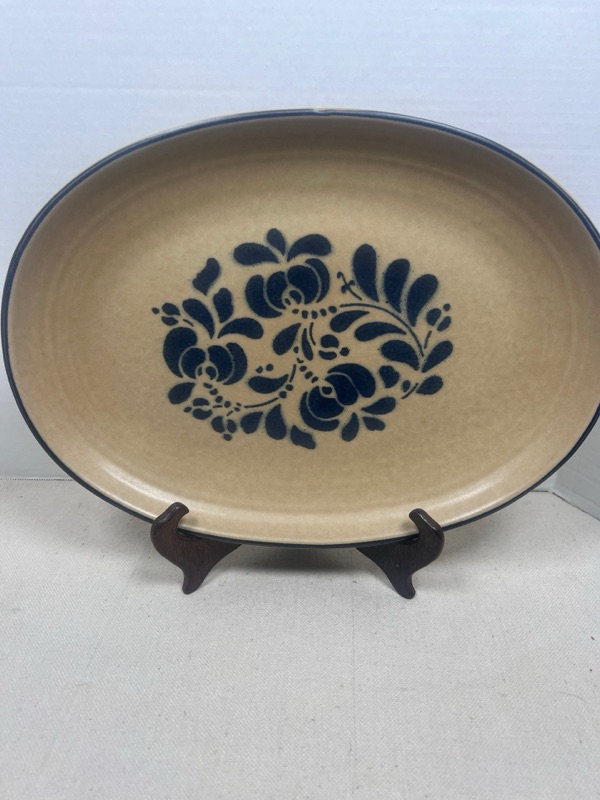
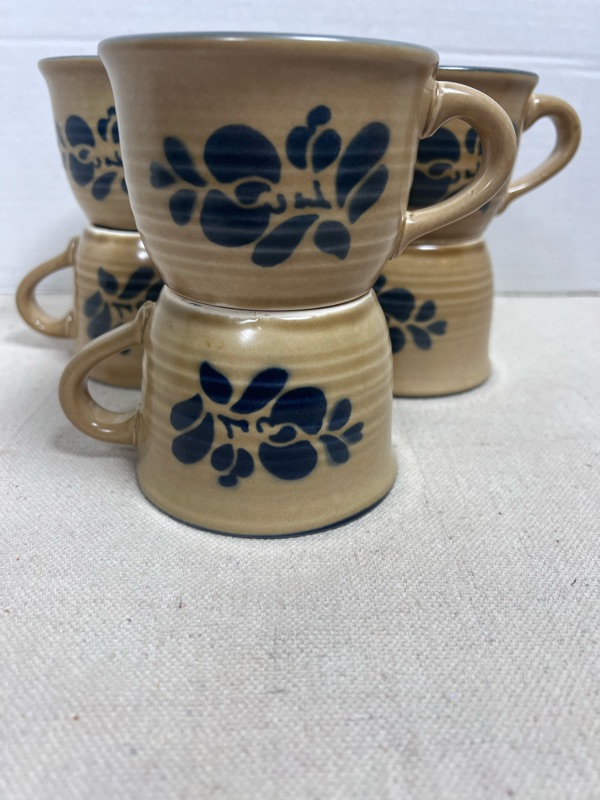
Pfaltzgraff introduced Folk Art in 1980. The pattern combines an earthy neutral ground with flowing blue flowers, leaves, hearts and stylized birds. Its decoration recalls traditional Pennsylvania German folk motifs, giving it an old-world feeling even though the dinnerware belongs to the late twentieth century.
The palette is one reason it has aged so well. Folk Art works with primitive antiques, blue-and-white pottery, warm wood, pewter, baskets and newer farmhouse pieces. It is recognizable without being fussy, and decorative without losing the usefulness expected from stoneware.
The collection grew far beyond a basic place setting. Depending on when and where they were produced, pieces may include plates, cups, mugs, bowls, serving dishes, canisters, crocks, casseroles, trivets, utensil holders and other kitchen accessories. That variety is part of the fun—and part of the challenge—of collecting it.
How to Identify Pfaltzgraff Folk Art
Start with the entire object, not the mark alone. A genuine identification should make sense when the design, material, shape and backstamp are considered together.
1. Look at the decoration
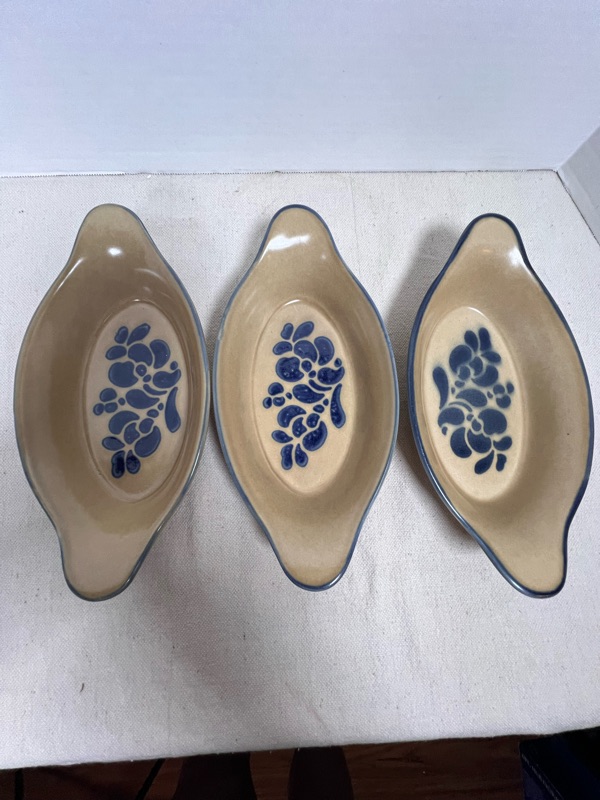
Classic Folk Art has dark blue folk-style imagery on a warm beige or tan body. Hearts, tulip-like flowers, curved stems, leaves and birds appear in different arrangements across the line. A dinner plate will not necessarily carry the same motif as a mug, canister or serving piece.
Color can vary slightly from piece to piece. Differences in glaze, firing, age and use may make one dish look warmer, darker or more softly blue than another. A small variation does not automatically mean the pieces are mismatched or inauthentic.
2. Feel the weight and surface
Folk Art is stoneware, so older tableware generally has a substantial, everyday feel. The glazed surface should be smooth, although manufacturing irregularities and signs of use are common on pieces that have spent decades in a working kitchen.
3. Turn it over
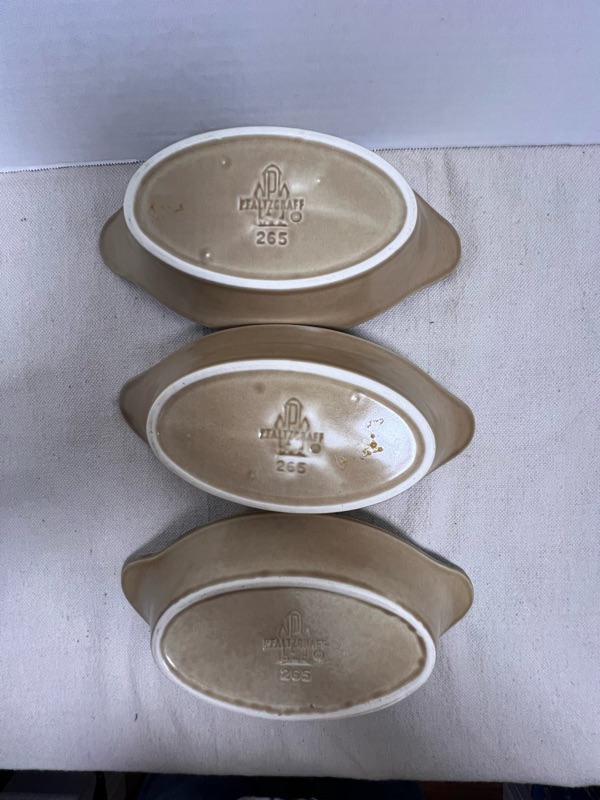
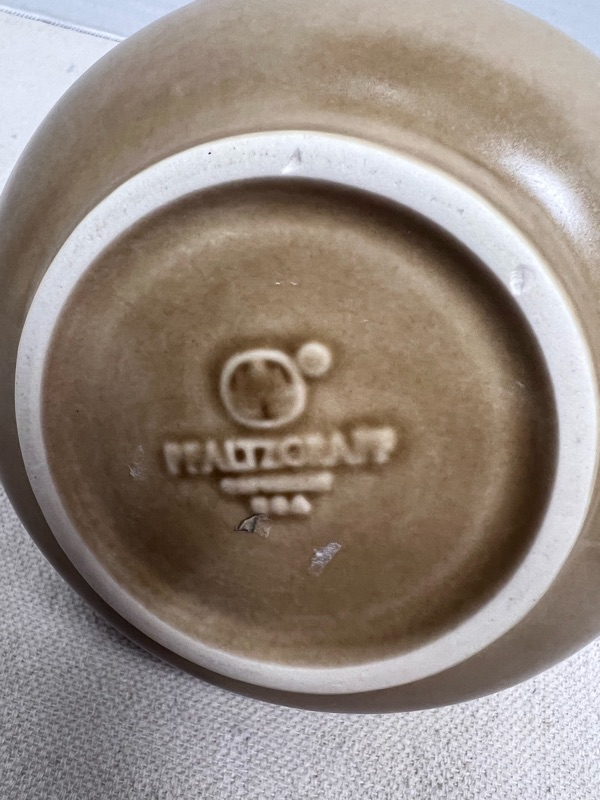
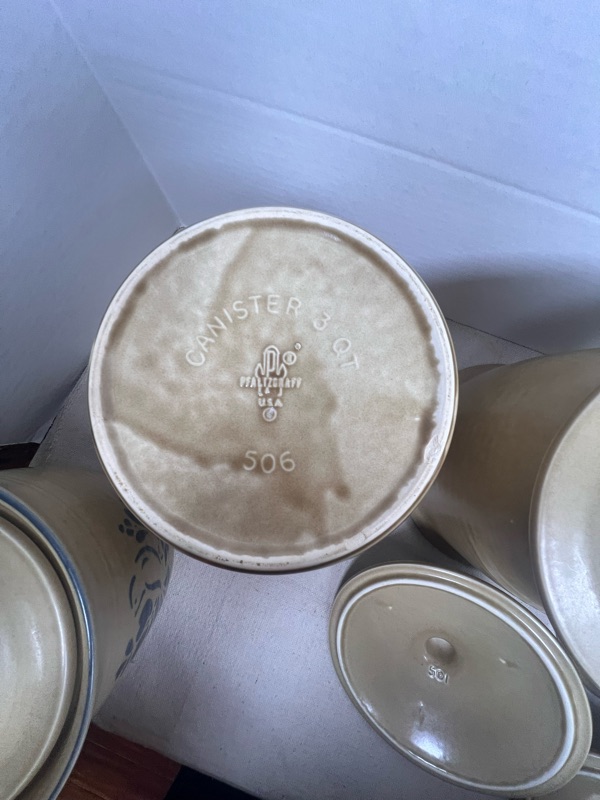
Many collectors specifically seek older examples with a Pfaltzgraff USA backstamp or the familiar castle-style mark. A U.S. mark is useful evidence of American manufacture and can help distinguish an older version from later production.
But the stamp is not a calendar. Pfaltzgraff used different marks over time, and marks can vary among shapes and production runs. A castle mark alone should not be used to claim one exact year. When a seller dates every castle-marked piece to a narrow period without additional documentation, treat that date as an estimate.
Later Folk Art pieces may show other countries of origin. That does not make them counterfeit. It means the collection was produced in more than one place over its long life. If American-made pottery matters to you, ask for a clear photograph of the underside of every piece in a set.
Is Vintage Pfaltzgraff Folk Art Valuable?
Most Folk Art is collectible rather than extremely rare. That distinction matters. A common dinner plate with normal wear will usually have a different market than an unusual serving piece, complete canister set or hard-to-find accessory in excellent condition.
Value is usually influenced by five things:
- Form: Unusual serving and kitchen pieces often attract more attention than individual place-setting pieces.
- Condition: Chips, cracks, repairs and heavy utensil wear can sharply reduce desirability.
- Completeness: Original lids, stoppers, inserts and matching components matter.
- Backstamp and origin: Some buyers prefer older USA-marked examples.
- Shipping practicality: Heavy stoneware is expensive to pack and ship, which affects what an online buyer will pay.
An asking price is not proof of value. For a realistic estimate, compare recently sold examples of the same form, size, backstamp and condition. A rare-looking item that has sat unsold for months may be priced optimistically; a completed sale shows what a buyer actually accepted.
Pieces Collectors Enjoy Finding
A collection does not have to begin with a full dinner service. In fact, one useful accent piece is often the easiest way to bring Folk Art into a kitchen.
Canisters and countertop pieces
Canisters make an immediate visual statement because their size shows the pattern clearly. Complete graduated sets are especially attractive on open shelving. Before buying, inspect every lid and rim, and ask whether seals are present, hardened or replaced.
Serving bowls, platters and casseroles
These are practical for family meals and strong display pieces when not in use. Matching lids and handles should be checked carefully because those areas are vulnerable to impact damage.
Mugs, cups and saucers
Mugs are an inexpensive entry point, while matching cups and saucers create a more traditional table. Check mug handles under bright light for fine cracks where the handle joins the body.
Trivets, spoon rests and napkin holders
Small accessories add the pattern without requiring a cabinet full of dishes. They also make appealing gifts for someone who remembers Folk Art from childhood.
Harder-to-find specialty forms
Collectors often get excited about pieces they do not see every day: unusual bakers, pitchers, large platters, covered dishes and decorative kitchen accessories. Scarcity should still be judged by completed sales and documented examples, not by a seller simply labeling something “rare.”
Condition: What Matters and What Does Not
Vintage stoneware does not need to look untouched to be worth owning. Honest signs of household use can be perfectly acceptable, especially when the piece will be displayed. Structural damage is a different matter.
Before buying, check for:
- chips along rims, feet, lid edges and handles;
- hairline cracks, especially near handles and corners;
- crazing, which appears as a network of fine lines in the glaze;
- dark staining beneath the glaze or inside crazed areas;
- utensil marks and loss of gloss on eating surfaces;
- repairs, glue residue or filled chips;
- missing lids, seals, stoppers or inserts; and
- wobbling or uneven seating on a flat surface.
Small glaze pops, kiln specks and other production quirks may have been present from the beginning. These should be disclosed, but they are not the same as a fresh chip or crack. Good listings show close photographs and describe the difference plainly.
Can You Mix Old and New Folk Art?
Yes—if a perfectly uniform table is not your goal. Color, weight, shape and country of origin may vary across production periods. Those differences can be noticeable when pieces sit side by side, so collectors seeking a matched set should compare measurements and backstamps before buying.
For a gathered kitchen, slight variation can be part of the charm. Older plates can be paired with later bowls, or a vintage USA-made serving piece can become the centerpiece of a newer set.
How to Care for Older Folk Art Stoneware
The safest routine for collectible pieces is simple: wash gently with warm water, mild dish soap and a nonabrasive cloth. Avoid sudden temperature changes, harsh scouring powders and stacking heavy pieces without protection between them.
Be cautious with any piece that is cracked, deeply crazed, stained or repaired. Its best future may be decorative rather than food-related. Microwave, dishwasher and oven claims can differ by piece and production period, so do not assume every item with the same pattern has identical care instructions. Follow the marking or documented directions for the exact piece you own.
How to Build a Collection Without Overspending
- Choose a purpose. Decide whether you want daily dishes, display pieces, a complete service or just a few kitchen accents.
- Make a short wish list. It prevents an inexpensive thrift find from becoming a cupboard of duplicates you never intended to buy.
- Record measurements. Sellers sometimes use names such as cereal bowl, soup bowl and vegetable bowl inconsistently.
- Request underside photos. This is essential if you are collecting a particular backstamp or country of origin.
- Compare the total delivered cost. A low item price can become expensive once safe shipping for heavy stoneware is added.
- Buy condition, not hype. “Rare” is less important than complete, clean and structurally sound.
Why Folk Art Feels Right Again
For years, matching white dishes and nearly empty countertops defined the ideal kitchen. Now many people are returning to rooms that feel layered, personal and lived in. Folk Art fits naturally into that shift. It carries color, history and pattern, yet it was designed to be useful.
That may be the real reason collectors keep finding room for one more piece. Folk Art is not precious in the formal sense. It is comforting. It looks at home beside an old cutting board, a crock of wooden spoons or a loaf of bread cooling on the counter. It reminds us that a home can be beautiful because it has been gathered slowly.
If you are looking for older pieces, browse the current Pfaltzgraff and vintage kitchen finds in my Etsy shop, or visit Vintage Finds by Anne on eBay. Inventory changes as new finds are added.
Do you remember Folk Art from your own family kitchen, or are you collecting it for the first time? Tell me which piece you are still hoping to find.
Collector’s note: Pattern histories and seller descriptions are sometimes repeated online without documentation. This guide distinguishes observable features from estimates. For research, compare the maker’s history with established replacement-dinnerware references and the markings on the exact piece.
Sources consulted: Pfaltzgraff company history and Replacements, Ltd. Folk Art pattern reference.